Biggest Blind Spot in Construction Tech: Small & Mid-Sized Companies
If You Own a Construction Company with 5, 10, or Even 100 People, This One's for You.
If You Own a Construction Company with 5, 10, or Even 100 People, This One's for You.
You're not small. You're just lean. You're running multi-million-dollar projects with tight crews, long hours, and nonstop phone calls. The truth is, the tech world hasn't been built for you.
The Reality No One Talks About
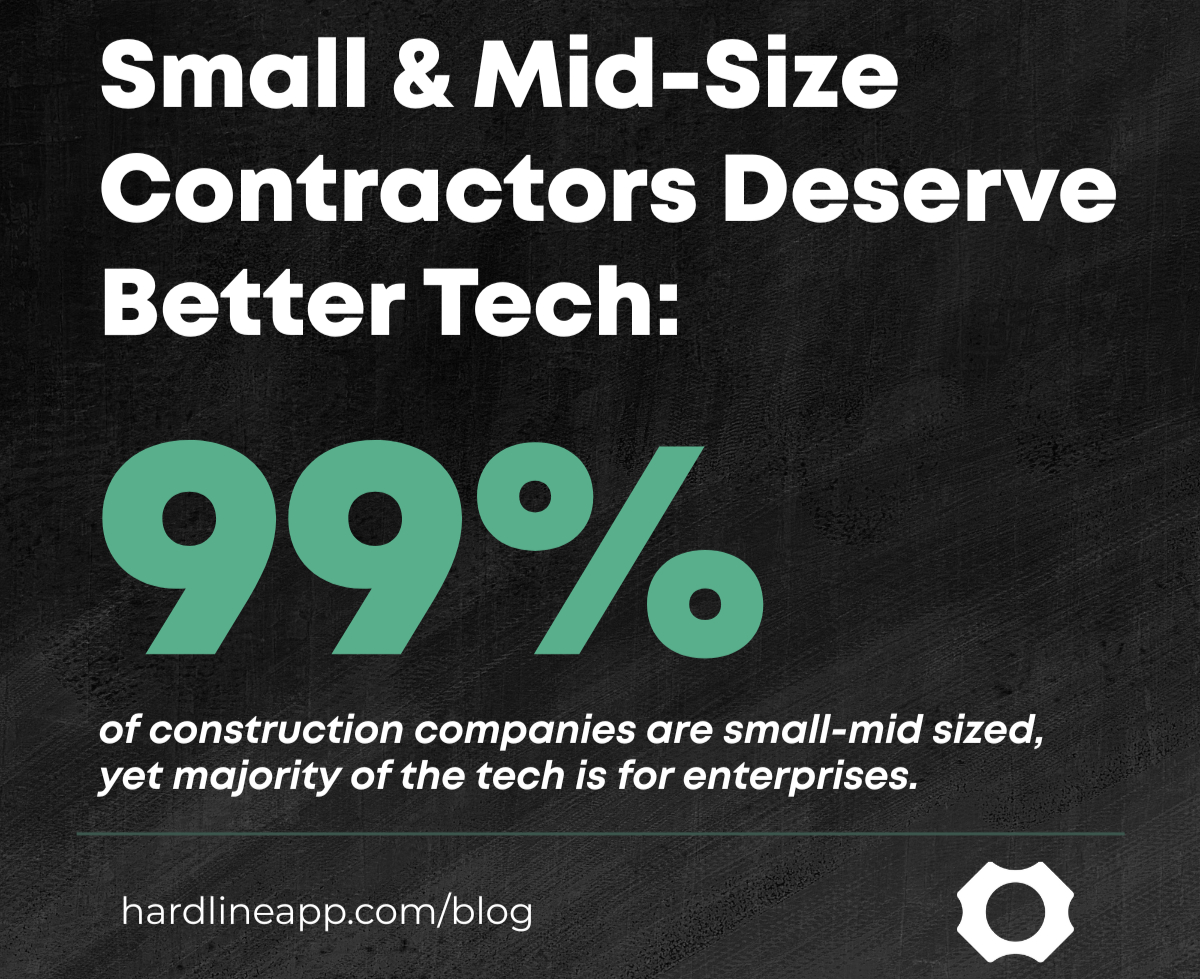
There are almost 4 million construction companies in the U.S. Nearly every single one of them is small or mid-sized. Most have fewer than 10 employees, yet they build the homes, offices, and infrastructure that power America. You're running real businesses, big numbers, small teams.
But software companies have spent years building tools for the giants, the firms with 1,000+ employees and full-time IT departments.
That leaves the rest of the industry, the ones actually in the field, trying to make do with Excel, texts, and late-night phone calls.
Why Most "Solutions" Don't Actually Help
After talking with hundreds of contractors and project managers, one theme keeps coming up: Most tech doesn't fit the way builders actually work.
Most apps are built by people who've never spent a day on a job site. They look slick in demos but fall apart when you're juggling clients, subs, and weather delays. If it takes more than a few minutes to figure out, your crew won't use it. Before you know it, you're back to paper and calls.
Imagine a 5-person team paying $2,000 per month for software. That's $24,000+ a year, before you've seen any real ROI. That math doesn't work when you're already battling margin pressure and unpredictable schedules.
You don't have time for "training sessions." You need something that just works, today, not after three setup calls and a webinar. For most SMB builders, every extra step is another reason to give up and revert to what you know.
Why This Should Matter to You
Because being "small" doesn't mean you should settle. You're dealing with the same issues: communication, documentation, and coordination. You just don't have the luxury of slowing down.
The companies that figure out how to simplify and automate those daily headaches without adding more screens or admin work will run circles around everyone else.
The Future of Construction Technology
The next generation of tools is starting to do just that:
- No training - No complex computer systems - Just tech that feels invisible
The Bottom Line
The construction industry doesn't need more software. It needs simpler tools that fit the way builders work. The next big wave won't come from enterprise dashboards. It'll come from small and mid-size companies adopting tools built for them.
Tools that save time, reduce rework, and keep everyone on the same page without slowing down the job.
Because the future of construction won't be built in offices. It'll be built by companies like yours, the ones doing the real work, day in and day out on the job site.
Conclusion: Embracing Change
In this ever-evolving landscape, embracing change is crucial. The right tools can transform your operations. They can streamline communication, enhance productivity, and ultimately lead to greater success.
So, why wait? Explore the options available to you. Find the tools that resonate with your team's workflow. Remember, you're not just building structures; you're building a legacy. Let's make it a strong one.
Karly Heffernan
Ready to capture every conversation?
Hardline turns your calls and site conversations into daily logs, RFIs, tasks, and more, automatically.