Construction Is Losing Its Memory, Not Just Its Workers
Your most experienced people are leaving, and what they know walks off with them.
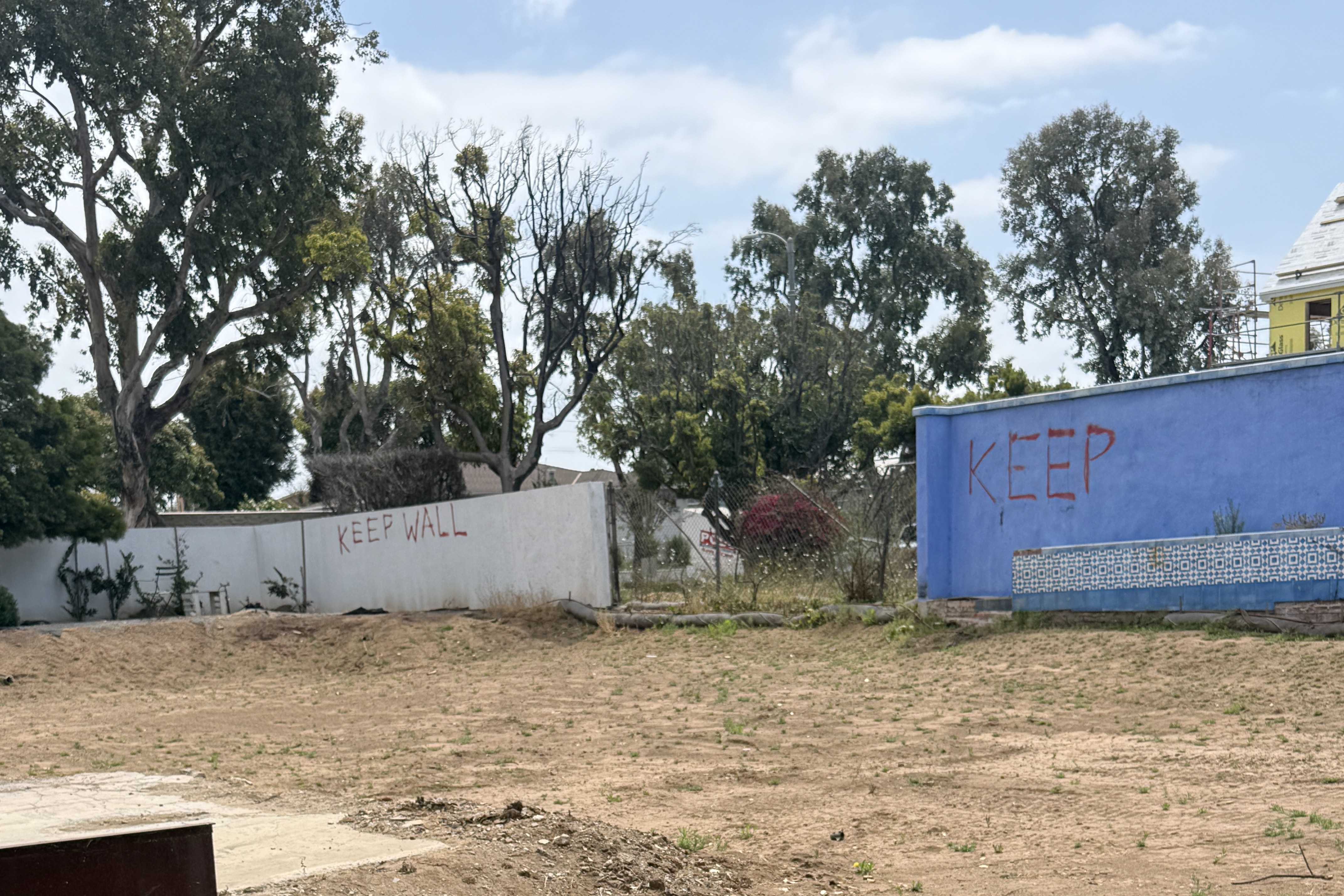
I was on a site walk in LA last week and saw this view. The word KEEP, spray painted on three walls.
A thought occurred to me. It's easy to read that as the field being low-tech. It's the opposite. That paint is the field doing what it always does, putting the instruction in the channel closest to the work, where it can't be missed. The crew has a system of record. It just isn't the software.
The real record was never in the software
On every jobsite, the most valuable data is invisible. It's in the head of the superintendent who knows which inspector to call before 7am, how this AHJ actually reads the code versus how it's written, which supplier always slips two days on rebar, how to sequence a pour nobody on the crew has done before.
None of that gets to the project management tool. This spray paint is just the rare moment that record becomes visible. The rest of it lives in people. The most valuable knowledge, experience, and data on a jobsite is in the workforce. And that workforce is dwindling.
The slow leak: the workforce is retiring
This is the part the industry files under "labor shortage," which undersells it. Deloitte and NCCER both put roughly 41% of the construction workforce at retirement age by 2031. More than one in five workers is already over 55. Only about 10% are under 25. ABC's chief economist, Anirban Basu, has said the majority of new-worker demand in 2026 comes from retirement, not from new projects.
You can't out-hire that on the available timeline. An apprenticeship takes five to seven years to produce a fully skilled worker, and McKinsey has projected construction output could fall $40 trillion short of demand by 2040 if the trend holds. Every retirement is a permanent withdrawal from an account nobody was keeping a ledger on.
The daily leak: people leave mid-project, constantly
Retirement is a topic at every industry conference. Arguably this is more impactful. The issue that wrecks projects is the one that happens on almost every long-term job. Construction turnover runs 20 to 30 percent a year, roughly double the all-industry average of 12 to 15, and some firms report rates far higher. Average tenure sits around four years, among the shortest of any major industry. Roughly a third of new hires are gone inside 90 days.
People leave mid-job for reasons that have nothing to do with the project. End-of-phase layoffs roll crews off and onto the next thing, and at some firms that's half the headcount. A competitor offers a couple dollars more an hour, and in one survey about half of workers said they'd jump for a raise that size, benefits or not. The work is physically punishing and the overtime burns people out. And right now immigration enforcement is pulling workers off sites with no notice: a third of firms reported being hit in a recent six-month stretch, and a quarter said their subs lost people. Net international migration, the backstop the industry leaned on for two decades, is projected to fall from 2.7 million in 2024 to around 321,000 in 2026.
And the cost isn't mainly the recruiting bill, though for a 100-person firm that runs somewhere between $660,000 and $2.6 million a year. The real cost is the handoff. When a PM or super rolls off a live job, the replacement doesn't inherit the project. They inherit a Procore login and a stack of files that document what got built, not why. Every decision, every workaround, every "we agreed on the phone to field-fab it this way" is gone. The new person doesn't just ramp slowly. They make different calls, because they're missing the map. That's how a project quietly drifts off the rails two months after a handoff nobody flagged as risky.
What operations leaders can actually do about it
You can't stop the retirements, and you can't out-bid every poacher. The one thing in your control is whether the knowledge leaves with the person. It doesn't have to.
Your best people narrate the entire job out loud, all day, on calls and site walks. That running commentary is the real record. The only reason it vanishes is that nothing is holding onto it. Capture the conversation and the knowledge stops walking out the door. As long as it doesn't ask the field to change how they work. The minute staying documented means a form on a roof, it doesn't happen. It has to ride on what the crew already does.
The cleanest way to see what that's worth is to watch the same handoff happen twice.
Picture the job that remembers
A hospital job, fourteen months in. Ray's been the super since the dirt moved. He knows the city inspector won't pass a rough-in before 7:30, that the rebar supplier always promises Tuesday and shows Thursday, that the structural engineer already blessed a field fix on the east stair back in month six, over the phone, no paper.
Then Ray gets pulled to a bigger project across town. In the world most firms live in, that handoff is a scramble: a couple of rushed afternoons where Ray tries to cram fourteen months into Marcus's notebook, knowing he'll forget half of it, and Marcus spends his first month re-asking questions Ray already answered a hundred times and learning about the rebar guy the expensive way. Most of what Ray knew never makes the jump. It leaves with Ray.
Now the version where the job was listening. Ray hands Marcus everything. Fourteen months of his calls, structured and searchable: the inspector's quirks, the supplier who slips, the stair fix and exactly who signed off. The whole project, the whole map, passed over clean. And the part that gets him, it took Ray zero minutes. He didn't block out a week to brain-dump or write a transition doc he'd never finish. The handoff was already done. Every call he'd made for fourteen months was captured, structured, and waiting. He just told Marcus "it's all in there," and it was. Marcus isn't guessing in week three. He's running the job by day three.
That's not a someday story. It's how Hardline crews already work, because the calls Ray was making anyway became the record without Ray lifting a finger. We onboarded a super at 1pm not long ago, and by end of day he had 80+ calls in the system as structured tasks and summaries, zero training. He didn't change a thing about how he works. He just stopped being the only place his own job was written down.
Ray is the daily leak. The slow one looks like Denny: thirty-eight years in, six months from retirement, the guy three generations of PMs learned the trade from. The old plan is to shadow him and hope you catch a fraction of it before the party. The new plan is that he already handed all of it over, without a single handoff meeting, because every call he made this year is captured. When he hangs up the hardhat, his judgment clocks in Monday for whoever takes the job. Forty years of knowing doesn't retire with him. It stays on the project.
Keep
The KEEP on those three walls will be gone by next winter. Sun, rain, a coat of primer, and the most important instruction on that site is just a stain.
The knowledge on your jobsite is fading the same way. Slower and quieter, one retirement and one handoff at a time, but fading. Your best people are writing the real record out loud every day, and most of it evaporates the second the call ends.
The field already told you what to do. They painted it on the wall. Capture it. Keep it.
Alena Tuttle
Ready to capture every conversation?
Hardline turns your calls and site conversations into daily logs, RFIs, tasks, and more, automatically.
Get started